Social & Philosophical Foundations of Education ED150 3 cr.
This course provides a study of the philosophical, historical, sociological, ethical,
and political bases of the N-12 American educational system. It includes a comprehensive
introduction to the issues, laws, policies, and practices affecting the education
system, teaching, learning, and assessment. It explains ways that teachers and schools
can work with students and families to provide a meaningful and equitable education.
Topics include diversity in student populations, school funding, high-stakes testing,
school desegregation and re-segregation, technology, standardized tests, and learning
standards. The history of the American educational system is discussed in relation
to current issues and topics in education, teaching, and learning. A 15-hour observation
in a general education classroom must be completed.
Introduction to Early Childhood Education ED201 3 cr.
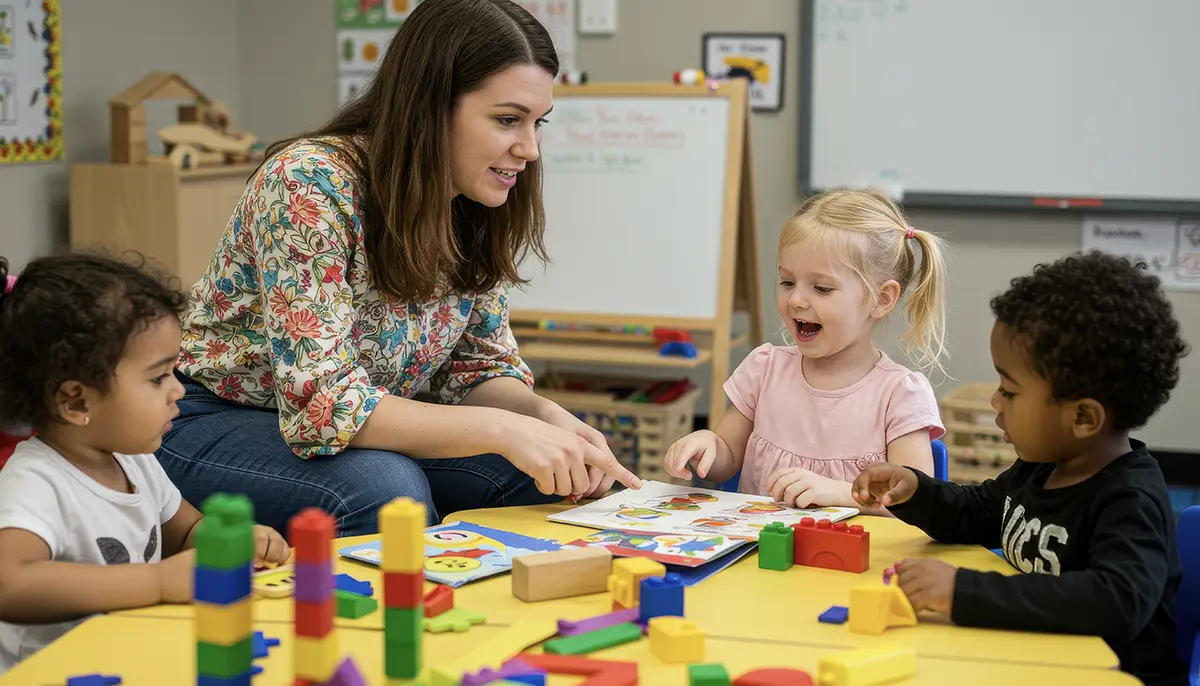
This course aids in understanding and providing for the needs and education of young
children in care/educational settings. Methods and materials used to plan, implement,
and assess integrated learning experiences that consider the inter-relatedness of
physical, social/emotional, and cognitive development are explored. The importance
of planning experiences for young children to develop intellectual curiosity and demonstrate
a respect for diversity of backgrounds is emphasized. This course includes a minimum
of eight hours of observation in a preschool classroom.
Child Development ED205 3 cr.
This course examines children’s physical, social, emotional, language, and cognitive
development from pre-natal to age twelve. Topics include childhood development theories
and research, the recognition and understanding of significant child behaviors, the
role of parenting and culture, the role of the teacher, influence of peers, and play.
Students must complete a 15-hour child observation in a daycare setting, observing
both infants/toddlers and preschool children.
Early Childhood Methods & Materials ED203 3 cr.
This course introduces early childhood curriculum development including planning,
implementing, and assessment based on the New York State Learning Standards. It covers
developmentally appropriate practice, methods, and materials for preschool through
primary grade children. Emphasis is placed on curriculum that meets the needs of the
whole child: cognitive, social, emotional, language, and physical. Knowledge is gained
of early childhood curriculum that is respectful to the backgrounds of all children
and families. Early childhood best practices are learned, grounded in early childhood
educational theories, including Vygotsky and Plaget, and using play as the vehicle
for planning, implementation, learning, assessment, and emphasizing Constructivist
practice. Best practice techniques, including lesson plan and thematic unit planning,
are demonstrated. This course includes a minimum of eight hours of observation in
a preschool classroom.
Introduction to Exceptionalities ED211 3 cr.
This course introduces early childhood curriculum development including planning,
implementing, and assessment based on the New York State Learning Standards. It covers
developmentally appropriate practice, methods, and materials for preschool through
primary grade children. Emphasis is placed on curriculum that meets the needs of the
whole child: cognitive, social, emotional, language, and physical. Knowledge is gained
of early childhood curriculum that is respectful to the backgrounds of all children
and families. Early childhood best practices are learned, grounded in early childhood
educational theories, including Vygotsky and Plaget, and using play as the vehicle
for planning, implementation, learning, assessment, and emphasizing Constructivist
practice. Best practice techniques, including lesson plan and thematic unit planning,
are demonstrated. This course includes a minimum of eight hours of observation in
a preschool classroom. Prerequisites: ED150 Social & Philosophical Foundations of
Education and ED205 Child Development. Prerequisites must be met with a minimum grade
of "C".